From someone who once had little interest in technology, Val has become an assistive technology advocate, presenting on regional, national and international stages. Read her story.
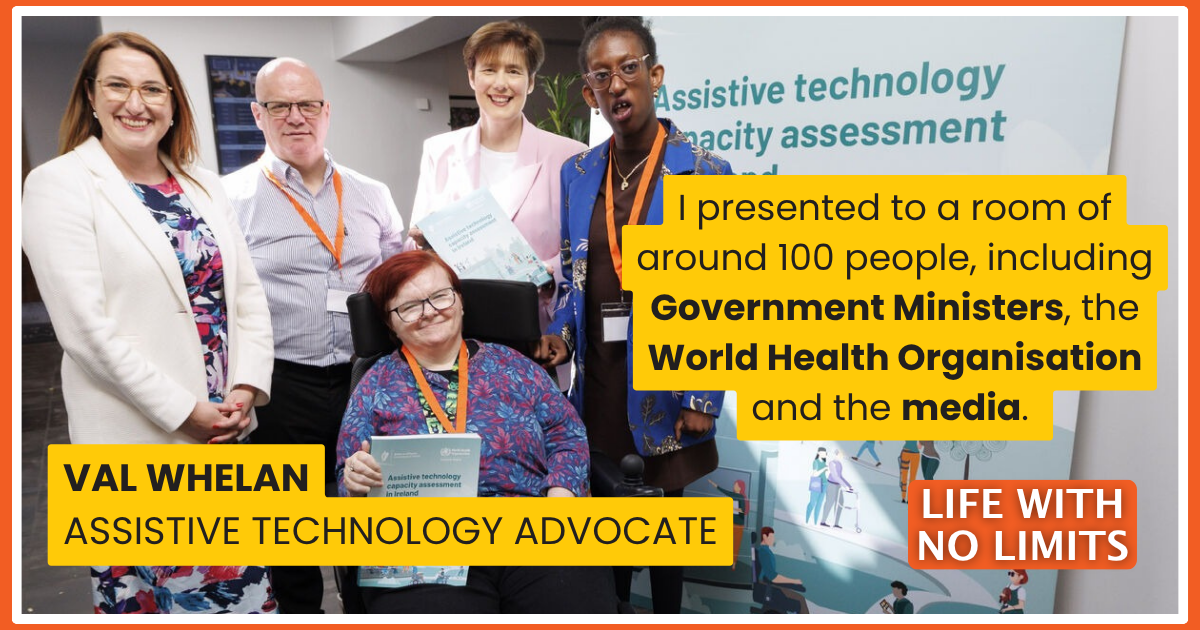
Val Whelan is a recognised voice for assistive technology. This year, she represented Enable Ireland at the launch of the assistive technology capacity assessment in Ireland.
She spoke in front of Government Ministers, the World Health Organisation, and the media. Val openly admits that she is someone who once had little interest in technology. So how did she end up speaking about AT on an international stage? Val shares her Life With No Limits story…
I’ve been in Enable Ireland since I was a couple of months old. When the Pandemic hit in 2020, all Enable Ireland hubs had to close. In response, adults with disabilities and Enable Ireland staff built the Virtual Service. It was a daily online programme, using Microsoft Teams. The programme aimed to reduce isolation, promote social connection, and maintain vital supports. I attended a few of the sessions, and I liked what I saw.
So, when the Virtual Service advertised for Virtual Support Workers, I decided to apply. I love helping people, and I saw an opportunity to do this as a Virtual Support Worker. Interviews were held, and I was delighted to get the job.
When I started as a Virtual Support Worker, I wasn’t into technology at all. There were Virtual Service sessions on Assistive Technology (AT), and I found the idea of it a bit intimidating.
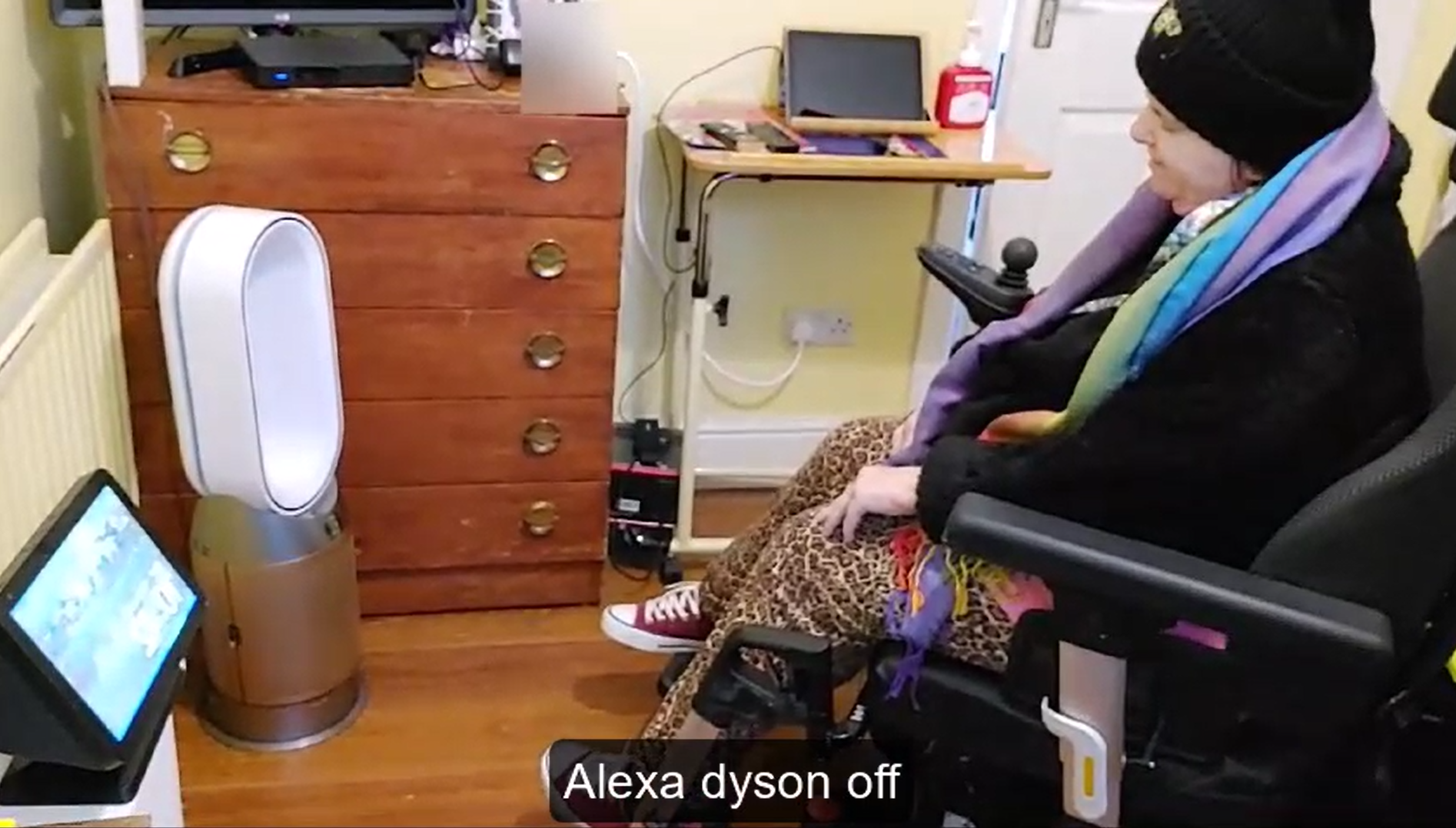
The Enable Ireland Virtual Service team then approached me and asked if I’d like to get my house equipped with off-the-shelf affordable AT. I really wasn’t sure if AT was for me. I’d gone through life doing things the hard way, and I was reluctant to change. However, with a bit of encouragement and support, I tried it. And I haven’t looked back. Anything I want to do now, I can do through Alexa – telly, lights, curtains, heating for the whole house. It’s been life-changing!
Through all of this, I found myself becoming really interested in AT, and I ended up applying for a course on Foundations in Assistive Technology.
It’s a professional development course run by Enable Ireland’s National AT Training Service and accredited by Technological University Dublin. I applied for the James Brosnan Scholarship and was delighted to be awarded it. This meant I could do the course free of charge. Through the course, you learn practical skills and build confidence in matching assistive technology to individual needs. It’s a tough course and involves a lot of work, but it’s great for your self-esteem and the people you meet.
I am particularly proud of the project I did to demystify AT for people over 50. I looked at how we can make AT more accessible for people my age and developed the hashtag #NotBadForAWomanOf50. It focused on breaking down barriers and promoting an understanding that it’s okay to make mistakes when experimenting with AT. From my personal experience, using AT is all about trial and error.
Completing the Foundations in AT course gave me a great sense of achievement; I’m proud to have passed. The certificate takes pride of place on my desk.
This year, I was involved in a consultation process, led by Dr Emma Smith, after the Irish government commissioned the World Health Organisation to undertake an AT Capacity Assessment for Ireland. They created a report which provides a road map for the development of a national AT ecosystem for Ireland. My experience of Assistive Technology and the setup in my own home contributed to their findings.
When the report was launched, they asked if I’d give a presentation and be part of a panel. I was honoured to be asked. It was a huge privilege.
At the launch, I presented to a room of around 100 people. Those in attendance included Government Ministers, the World Health Organisation and the media. I was a bit nervous at first, but once I got the ball rolling, it was great.
I advocated for the use of AT for people who are a bit older. In my presentation, I spoke about how I’d adapted technology in my home. I shared where I was, where I am now, and the confidence it’s given me. On the panel, there were Professors, other experts in AT, and other organisations.
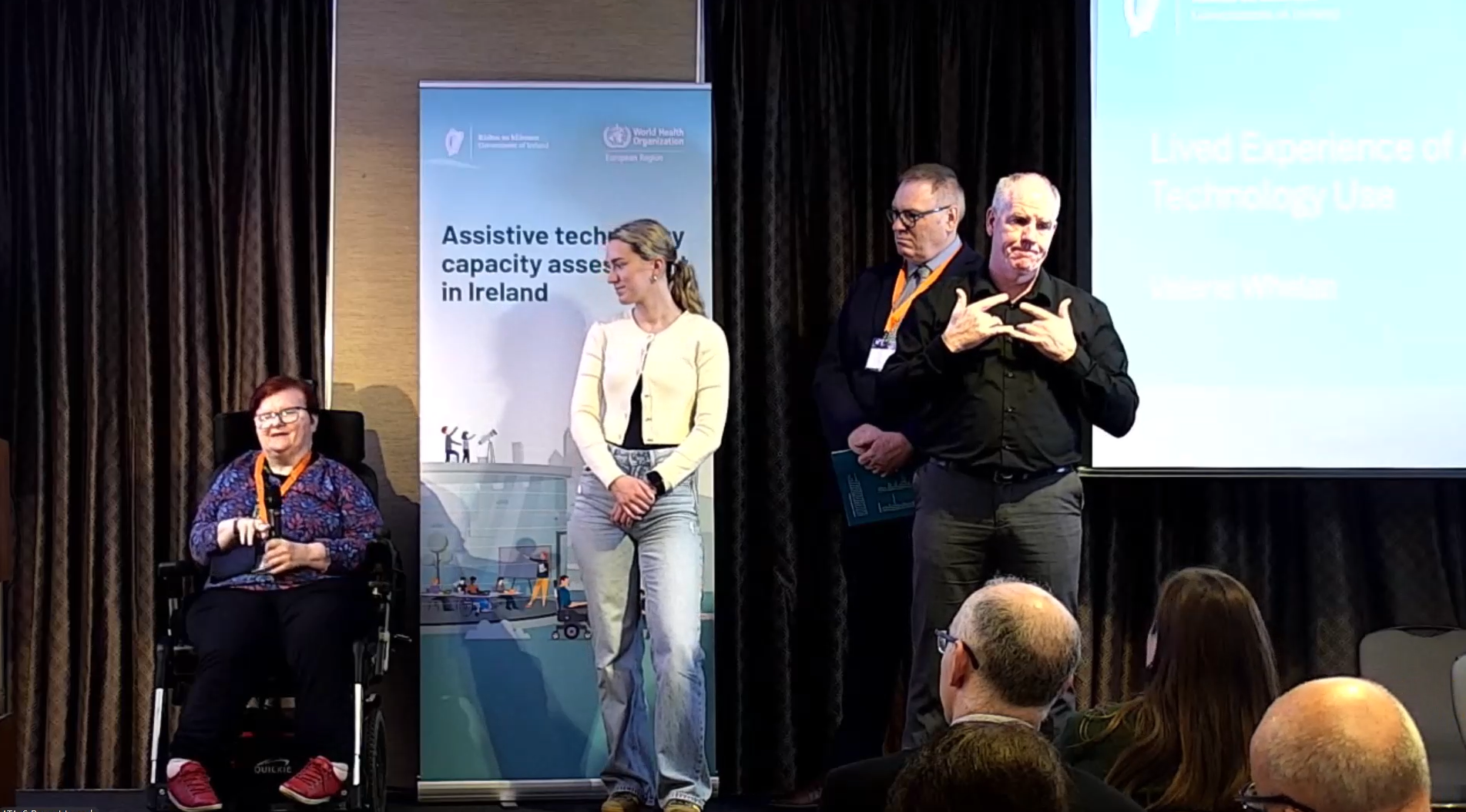
Now, I’m proud to be an advocate for Assistive Technology. I’ve delivered training and presentations at local, national, and international levels. Recently, I delivered an Assistive Technology Presentation at the HSE Headquarters in Bray. I also appeared in their video about the HSE Monitoring System.
In my role as a Virtual Support Worker, I now use my own experiences with AT to work with other Service Owners. I support them in embracing technology and increasing their independence. I’ve delivered over 100 weekly sessions on assistive technology and advocacy training to date. The topics have included AT in healthcare, wearables, and using AT at home. I’ve been employed with the Virtual Service since December 2021; it’s still going strong after COVID, and I’m loving it.
Looking at the future of AT, I’d like to see technology become self-charging. My home helper charges things for me, but what happens when she’s gone? I can’t physically pick things up, so wouldn’t it be good if things could be self-charging! It’s also been positive to see access to Assistive Technology improve through the AT passport. The passport has made funding much more transparent.
For me, I get so much joy from what I’m doing as an AT advocate and Virtual Support Worker. I love hearing that people are getting value from what I’m doing. I’m always honoured when I’m asked to be involved in Assistive Technology events and provide my perspective. Long may it last!